Most stain-resistant claims are real, but limited. Spills happen, and some floors handle them better than others. Knowing the difference before you choose matters more than trusting a warranty.
The right answer depends on your household, your floor type, and how realistic you want to be about spills. Start with where you are.
Porcelain tile is the only floor that is genuinely stain proof. The surface is dense and non-porous, so spills sit on top instead of soaking in.
Vinyl plank and solution-dyed carpet are the strongest choices when tile is not the right fit. Neither is stain proof, but both are engineered to resist and recover.
Ken walks through why most stain-proof claims don't hold up, and what to look for instead when choosing a floor for a household that expects spills.
Almost every flooring product on the market today carries some version of a stain-resistance claim. Some of those claims are meaningful. Many are not. The problem is that most homeowners don't find out the difference until something spills.
The reality is straightforward: you can stain wood, carpet, and luxury vinyl plank if you try hard enough. Only porcelain tile has a surface dense enough to be genuinely non-porous. Everything else is a matter of degree.
For carpet, the best stain resistance comes from the fiber itself. Two options stand above the rest: Mohawk's SmartStrand, which uses nanotechnology that encapsulates the fiber to resist penetration; and solution-dyed fiber, where color is added while the fiber is still in a liquid state, so it runs all the way through, like a carrot rather than a painted surface. Either one handles spills significantly better than standard carpet, but neither is stain proof.
Warranties are worth reading carefully. In our experience, flooring warranties in this industry rarely deliver on what the marketing implies. Be skeptical of any product that promises stain-proof protection outright.
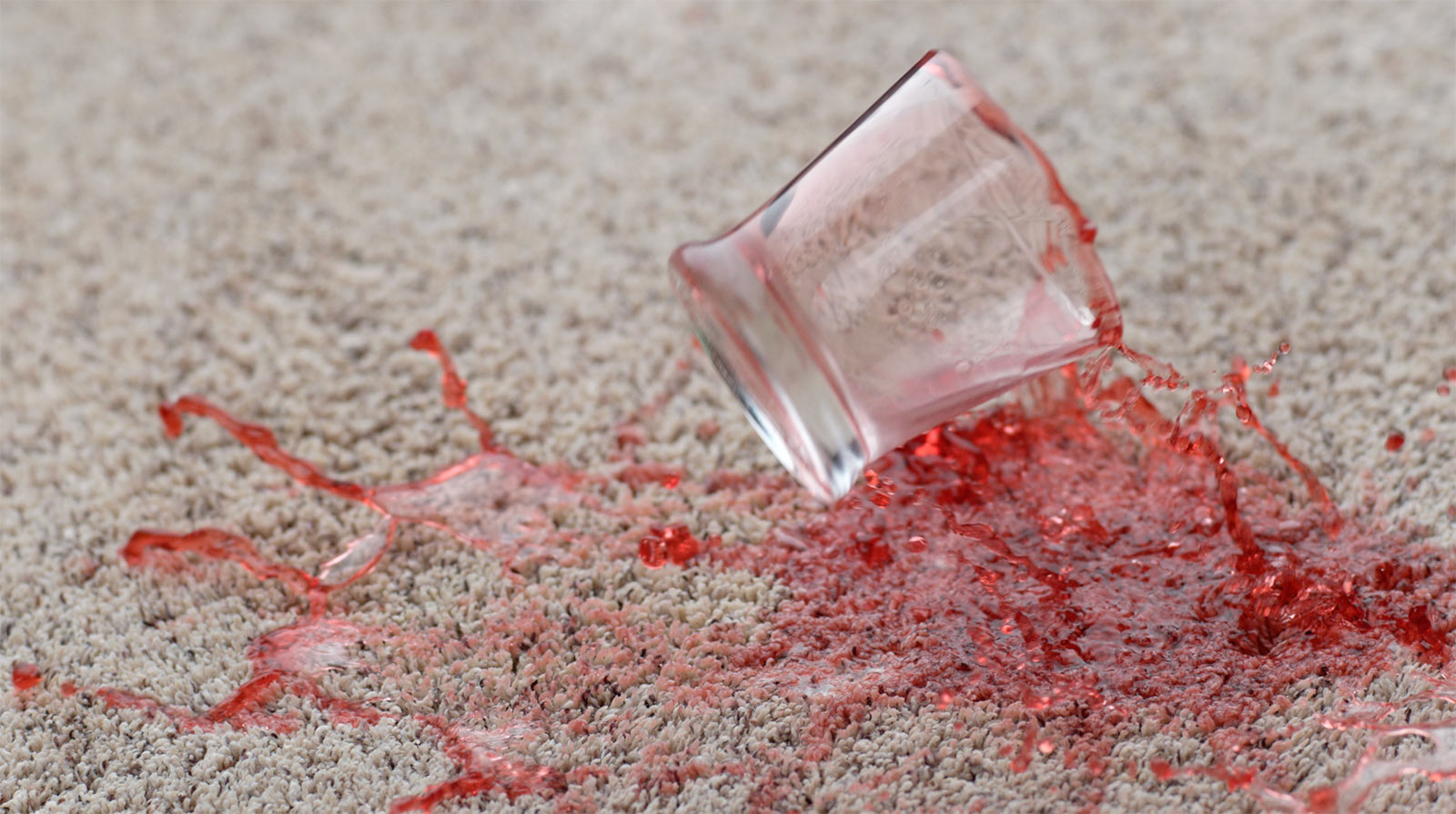
No matter which floor you choose, time is the main variable that separates a spill from a permanent stain. Act quickly, but act carefully.
On carpet, blot rather than scrub. Scrubbing compromises the texture of the fiber and pushes the stain deeper. Start with plain water, then add a single drop of dish soap if water alone isn't enough. Stop there. Over-the-counter spot removers from the grocery store often contain bleach or other harsh chemicals that can pull the dye out of the carpet, creating a bigger problem than the original stain.
If the right cleaner and quick action don't resolve it, call us before trying anything else. When you purchase flooring from us, we'll send you home with a free bottle of SoilBlaster, our preferred stain cleaner, along with clear guidance on how to use it and what to avoid.
Visit our Middletown showroom and we'll help you find the floor that actually fits your household. Bring photos of the space and tell us how the room gets used. We'll be straight with you about what holds up and what doesn't. Free measure and quote, no commitment required.