Before the planks go down, there is a decision that is easy to overlook: which direction they run. It affects how much a wood floor moves over time, and how the room looks once it is finished.
Direction matters differently depending on where you are in the process. Here is where to start either way.
If you considering new wood flooring, direction is one of the details we plan for. Take a look at our wood styles and we will work out the layout with you.
If you are noticing more movement in your wood floor than seems normal, direction could be part of it. Give us a call and we can talk through what you are seeing. Sometimes the issue can be mitigated by more tightly controlling temperature and humidity, for example.
Ken explains the simple rule he follows for which direction to run wood flooring, and why it holds up better that way.
Wood planks expand more across their width than they do along their length. That is simply how the material moves.
Running the planks the long way across a room means less opportunity for that movement to show up in the floor. Running them the other way puts more of that width-wise expansion to work against you.
It also comes down to how the room looks once it is done. Ken's take is that wood looks better installed the long way.
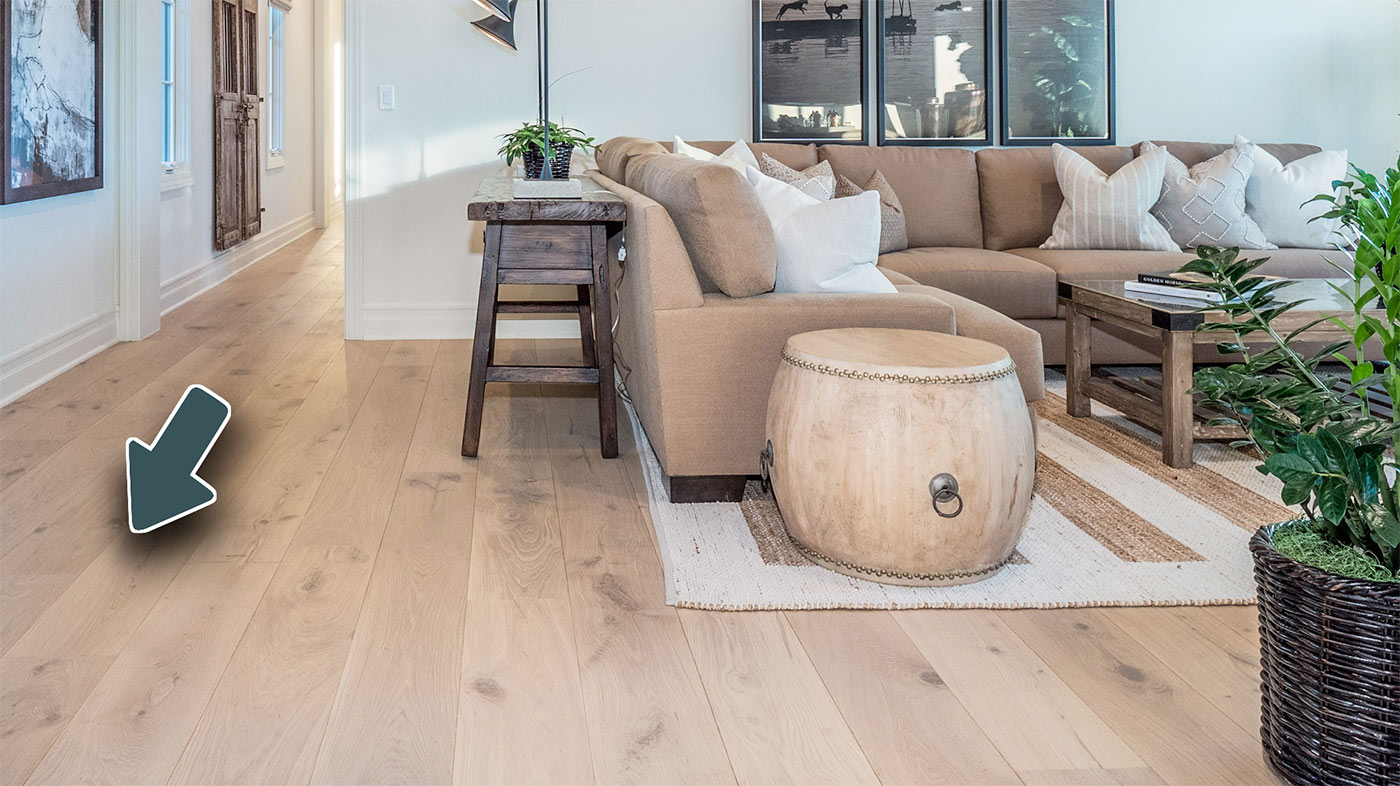
Whether you are checking a floor you already have or planning a new one, plank direction is one of the details we account for, not something left to guesswork.
There is a wide range of wood flooring out there, but only a handful of options are really right for a given room. Our job is helping you land on the ones that fit, laid out and installed the right way.
Whether you want a current wood floor looked at or you are planning new wood flooring, stop by our Middletown showroom and we will help you get the direction right.